Review by Daniel Mansfield
Last time on Doctor Who, we threw it back to 2008 with a sequel to much-loved episode Midnight. This week, we’re throwing it back to just last year, as we catch up with former companion Ruby Sunday to see what’s been going on in her life after leaving the Doctor. Here’s our review of Lucky Day, by Pete McTighe.
Ruby Sunday

Taking centre stage in this episode is former companion Ruby Sunday (Millie Gibson), who we rejoin a year after her travels with the Doctor. We already know from last year’s 73 Yards that Gibson is more than capable of holding up an entire episode on her own, and Lucky Day is a reminder of that, shifting focus away from the Doctor and Belinda to find out what Ruby has been up to since we last saw her.
It’s immediately obvious how much Ruby has changed from her adventures with the Doctor. Throughout the first half of the episode, she takes on a Doctor-like role in her relationship with Conrad, introducing him to a whole new world full of weird and wonderful things. This is most evident when she explains to Conrad what the Shreek does in the café, Ruby casually narrating his fate with quiet, chilling wisdom, and during the pub scene where she takes charge of the fight against the Shreek.
We also see how Ruby’s time with the Doctor has affected her negatively, with McTighe addressing the anxiety and PTSD she has developed from being in life-or-death situations so many times. Although Ruby’s anxiety is shown to be completely justified as there actually are strange things going on, it’s still a novel- and realistic way of revisiting an old companion. Of course you would be traumatised by travelling with the Doctor. Perhaps it would have been better, though, to throw in a couple of moments where Ruby panics, only to find out nothing bad is actually happening, to really hammer home how her PTSD is impacting her.
Things pivot away from Ruby a little in the second half, focusing more on UNIT and Conrad, but her character by no means fades into the background. Not only do we get the fantastic scene where she decides to go away to get her head straight, the culmination of her arc in this story, but we see how travelling with the Doctor has made her a more compassionate person, choosing to save Conrad from the Shreek despite all the terrible things he has done.
My one major complaint with the handling of Ruby’s character here is that we don’t get enough time with her family. The rediscovery of her birth mother and father in Empire of Death was a huge turning point for her, but it feels like this isn’t really explored here besides Louise’s brief appearances. How does Ruby feel having her birth mother back in her life? Has she faced any difficulties adjusting to this huge change? How do Carla and Cherry feel about this? What is Ruby and Louise’s relationship like?
The omission of what happened with Ruby’s father feels particularly egregious, as, the last time we saw her, she was about to get back in contact with him. He’s mentioned briefly, but whether Ruby ever actually met him or what went on is never expanded on. Maybe we’ll learn more in the finale – we have, after all, been told that Ruby’s adoption story was conceived as a two-series arc, so hopefully there’s more to come on this.
Conrad
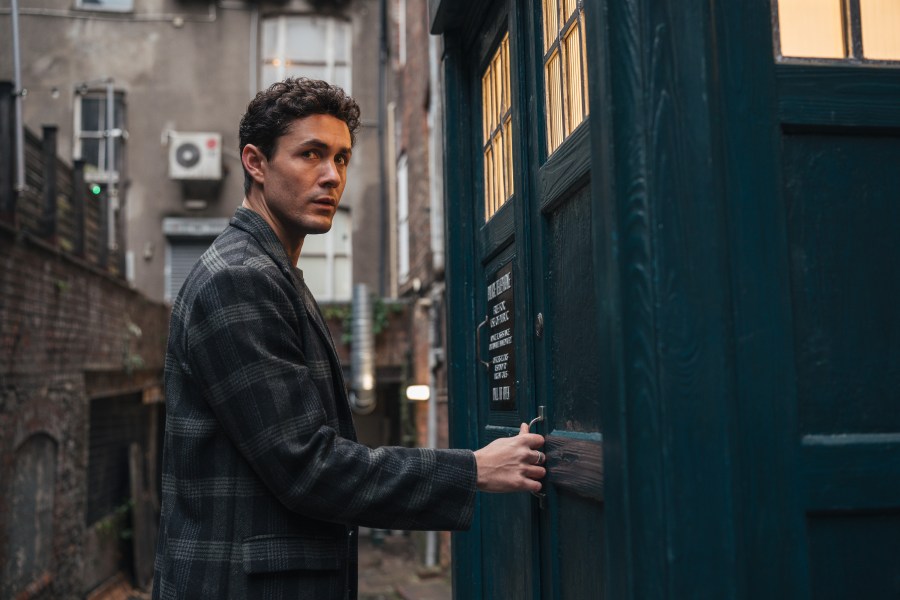
The other star of this episode is Jonah Hauer-King as Conrad, Ruby’s new boyfriend. Initially presented as a hapless wannabe Doctor, Conrad is later revealed to be a conspiracy theorist hell-bent on bringing UNIT down. Why he turned against UNIT isn’t made clear. Did he apply because he wanted to follow in the Doctor’s footsteps, get rejected, and then grow bitter? Or was he already anti-UNIT, applying as part of a larger plan to bring them down? Either way, the twist doesn’t hit as hard as it could coming as early in the episode as it does, but it’s a great way to bring into Doctor Who the pressing real-life issue of people spreading lies to gain power.
Hauer-King gives a barnstorming performance, hoodwinking us all with the sweet, clumsy Conrad from the first half of the story, and then shocking us with his cocky, maniacal true self. The shift in attitude, body language and facial expressions between the two versions of Conrad is a masterclass in acting – it’s hard to get your head around the fact that this is even the same person.
Team UNIT
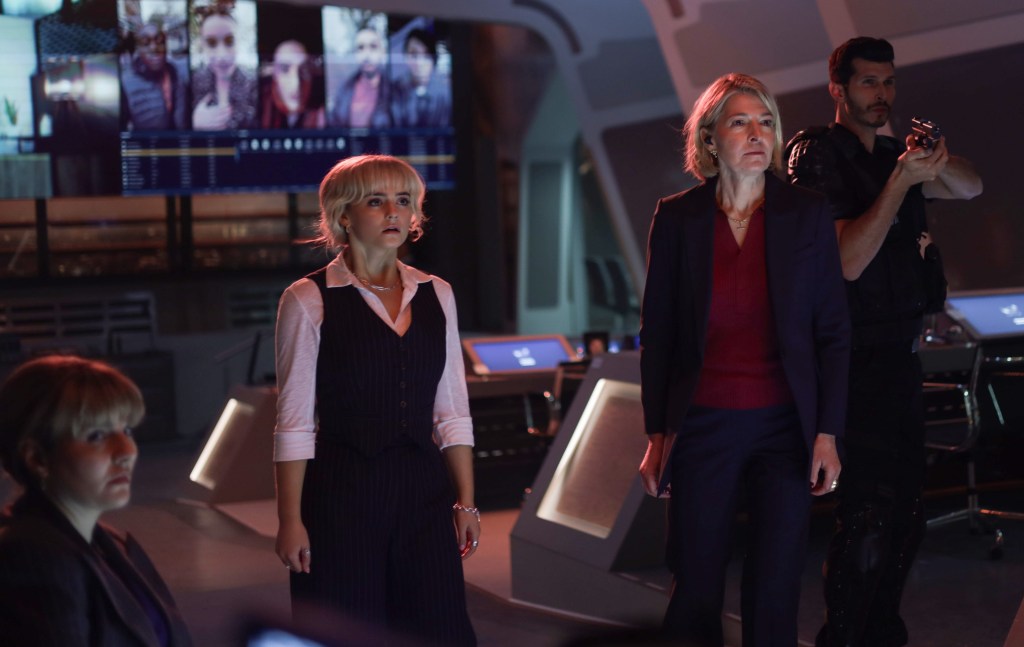
Also returning here is the extended UNIT family first introduced in 2023’s 60th Anniversary Specials. It’s nice to come back to them, especially Shirley (Ruth Madeley), who we haven’t seen since The Giggle, and doubly so given this is an episode that turns out to be all about them.
The reveal of UNIT as a public-facing organisation with its own tower in central London hasn’t been explored much since The Star Beast, so it’s refreshing to see McTighe dig into that concept here. What starts as a quirky rom-com with aliens quickly shifts into a sharp takedown of right-wing trolls – people so ignorant or malicious that they undermine those doing good just to gain clout. By tackling a real-world issue through UNIT’s story, McTighe cleverly draws parallels with current affairs, inviting the audience to reflect on them without losing sight of the sci-fi fun Doctor Who is loved for.
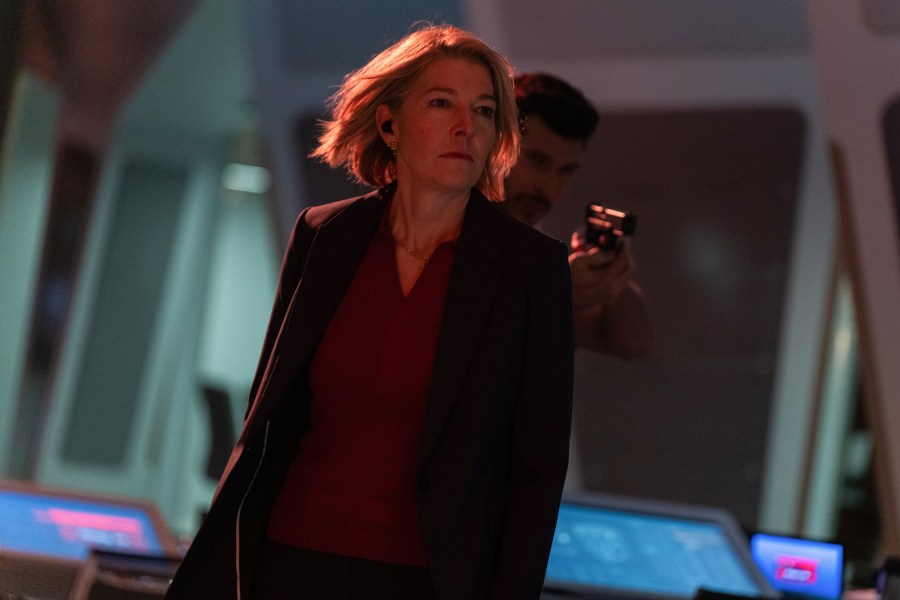
There’s also some really interesting material here for Jemma Redgrave‘s Kate. In fact, this is probably her best episode in all the 13 years she’s been on our screens. Previously, Kate’s main (and the cynical among us might say only) defining trait was being the Brigadier’s daughter, a tie to the Classic era of Who that gets mentioned almost every time she appears. While this is usually used as a bit of fanservice, recalling a much-loved character from yesteryear, McTighe uses it here to propel Kate’s character in an interesting new direction.
We learn here that Kate is so committed to preserving her father’s legacy and UNIT’s mission that she’s willing to take extreme – even immoral – action to defend it. When Conrad insults both her father and the organisation he helped to build, she becomes uncharacteristically ferocious, unleashing the Shreek on him and appearing ready to let it kill. This shocks Ruby, the viewer, and even her colleagues Shirley and Colonel Ibrahim, revealing just how far Kate will go in UNIT’s name. By portraying Kate in this manner, McTighe offers a more complex take on the episode’s political themes. While Conrad is clearly in the wrong, Kate’s response to his actions is over-the-top and dangerous, creating a compelling moral tension.
The repercussions of this look set to continue later in the series, and in upcoming UNIT-focused spinoff The War Between the Land and the Sea, and I’m very excited to see what happens next.
The Doctor and the Nurse
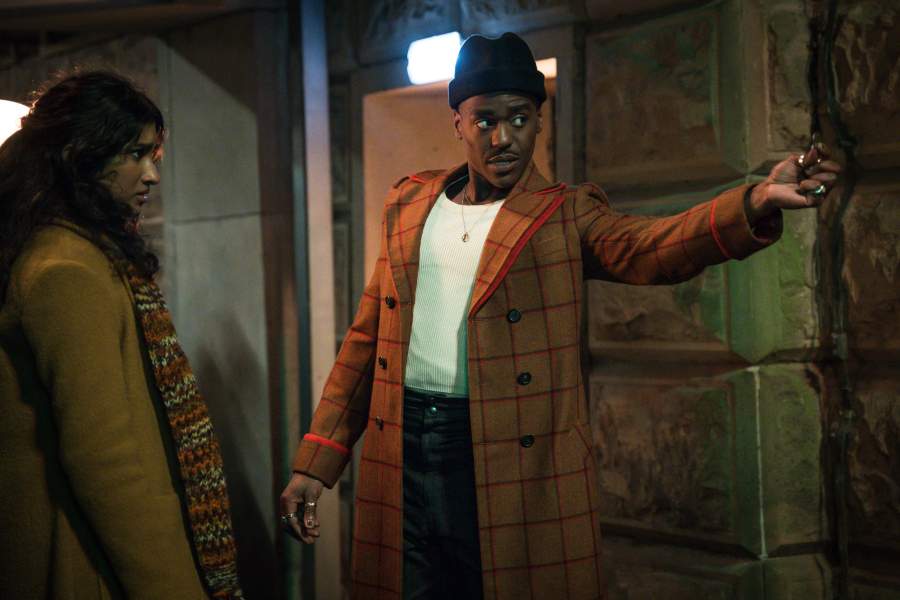
What with the focus on Ruby and UNIT, the Doctor and Belinda only appear briefly here, the latter especially so, only appearing in one scene. As such, there’s not a great deal to say about them in this review.
What I will say, though, is that Ncuti Gatwa gives a spellbinding performance during the Doctor’s confrontation with Conrad at the end of the episode, where he gives a brutal takedown of lying, attention-seeking conspiracy theorists who seek to turn our attention away from the real issues plaguing us. Echoing similar speeches given by the Thirteenth and Fourteenth Doctors during episodes like Orphan 55 and The Giggle, this scene teeters precariously on the line between didacticism and being an outright, fourth-wall breaking message to the audience, but as someone who thinks the more political Doctor Who is the better, I really don’t mind. To those who complain about the show preaching to its viewers, though, I can see why this might rub some up the wrong way.
Whatever your view on Doctor Who‘s relationship with politics, though, you have to agree that Gatwa and Hauer-King’s performances are electric here, both playing characters who view their own views as absolute and refusing to back down. Gatwa is actually, properly scary here, ruthlessly telling Conrad that he will die alone and in prison, and showing no remorse about this. The Fifteenth Doctor’s darkest moment yet? I think so.
We also find out that Conrad is the reason the Doctor knew who Belinda was at the beginning of the series. This is a surprisingly simple explanation for something that had the potential to be very timey-wimey. The Doctor knows who Belinda is because, in the future, he and Belinda met the young Conrad, who then grows up and tells the Doctor about her. Okay, maybe simple isn’t exactly the right word, but it’s at least nice to have that question answered without there being a huge mystery behind it. We already have enough of those what with Mrs Flood, how Belinda’s Star Certificate got to Missbelindachandra One and whatever’s going on on May 24th.
Direction and Music

As is often the case with episodes set in the present-day, this story takes a step back from elaborate direction and focuses on a more realistic style. That’s not to say Peter Hoar‘s work is underwhelming in any way (but we know this already from the excellent job he did on The Robot Revolution), just that the Lucky Day feels less showy than other episodes.
That said, there are a couple of great scenes that are realised with flair, particularly those involving the Shreek. Conrad’s first encounter with the voracious alien is brilliantly done, ramping up the tension with spooky shots, jumpscares and an ominous heartbeat sound underscoring everything. Similarly, the scene where Ruby explains the Shreek’s modus operandi breaks free from the otherwise realistic look of the episode to great effect, Hoar giving us a creepy fantasy sequence where Conrad imagines the Shreek creeping up behind him.
Speaking of the Shreek, it’s a great monster, traditional in all the right ways and really well-executed. Its attack on the UNIT Ops Room is brilliantly done, the combination of prosthetics, movement work and VFX really bringing its single-minded ferocity to life. I also love the idea that it appears once a year and marks people to attack the next time it emerges from its hive – a simple but chilling idea that I would have liked to have seen explored further.
Other Observations
- UNIT’s big helicopter entrance was exciting, and well-shot. I liked it.
- If Jordan Lang was a UNIT-denier, surely he would have realised while working there that aliens were real. Was he so blinkered that, despite working alongside Kate and the team, that he still believed it was all a sham?
- In the same vein, we never quite find out whether Conrad really doesn’t believe in aliens, or whether he does and is spreading lies for attention and power. Surely after being taken into the TARDIS and meeting the Doctor at the end he finally realises the truth?
- Also, it feels a little convenient that Jordan managed to get a job at UNIT when Conrad failed. The Vlinx is very easily able to uncover his conspiracist leanings once his true colours are revealed, but why were no background checks run before he was hired?
- Did the Shreek actually rip off Conrad’s arm, or did it just bite it? Obviously a show going out at 7pm isn’t going to show someone being dismembered, but it’s not actually clear what happened there.
- Mrs Flood again! And she’s working with Conrad. Interesting. So she wants to bring down UNIT too, and, as we learnt last episode, is interested in the Vindicator for some reason. She’s also Ruby and Belinda’s neighbour. How do all these things connect?
Final Thoughts
Like 73 Yards before it, Lucky Day tricks the viewer into thinking it’s going to be one kind of story, then pulls the rug halfway through to reveal it’s actually about something completely different. And it really works. This is a triumphant return for Ruby Sunday, a brilliant introduction to Conrad – presumably the big bad for the series finale alongside Mrs Flood- and an intriguing examination of how UNIT operates and the public’s perception of it. I look forward to seeing these themes develop as the series goes on. Hard-hitting, political and thought-provoking, Lucky Day is another success in what’s shaping up to be the best run of Doctor Who episodes in ages.
Lucky Day is available to watch on BBC iPlayer in the UK and on Disney + in the rest of the world




Leave a comment