
Review by Daniel Mansfield
Last time on Doctor Who, we met Belinda Chandra, the latest in a long line of TARDIS travellers. There were robots, spaceships, revolutions and the beginnings of one hell of a mystery. Why can’t the TARDIS get back to May 24th 2025? We now join the Doctor and Belinda on their first adventure together, as they head back to Miami in 1952.
Lux by Russell T Davies is the second episode of this new season. But does it stand up to The Robot Revolution? In short – yes, absolutely.
The Doctor and the Nurse
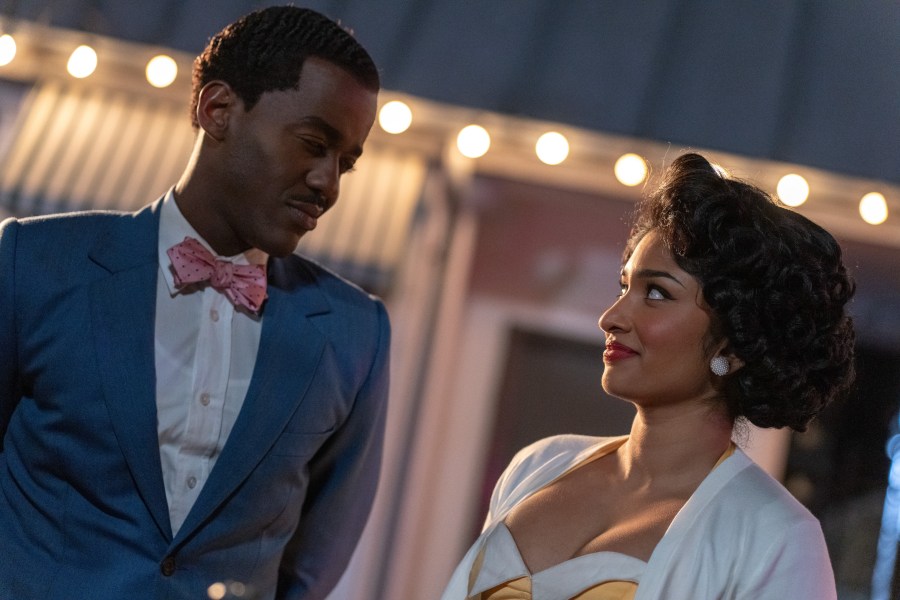
Last episode set up one of the most interesting TARDIS dynamics in recent memory, with a companion who doesn’t quite trust the Doctor and wants to go back home rather than travel the universe. While this dynamic continues here, it also gains more depth, with Belinda slowly coming round to the Doctor’s lifestyle over the course of the episode. We first glimpse this change of heart when she realises they’ve landed in the past, and heads straight for the TARDIS doors to go out and explore, but things really kick off during the diner scene when Mrs Lowenstein explains how the Doctor’s arrival has brought her hope in the face of her son’s disappearance.
Having seen that the Doctor’s lifestyle, while dangerous, is ultimately geared towards doing good, Belinda agrees to stay in Miami and investigate the abandoned picture house, which feels like a really natural development of her character. As a nurse, she has devoted her whole life to helping other people, so it’s only natural that, once she sees the Doctor has done the same, she feels more of a kinship with him.
There’s also a gorgeous scene where, to acquire more depth and escape Mr Ring-a-Ding’s two-dimensional cartoon prison, the Doctor and Belinda reveal truths about themselves to one another, which is a really elegant way of addressing things like the Doctor being the last of the Time Lords, and Belinda’s fear about what awaits her on May 24th 2025.
By the end of the episode, Belinda has realised that, although the Doctor’s lifestyle isn’t one she would choose to adopt willingly, it has led to the lives of fifteen people being saved and that, by being more open towards her new friend, she has contributed to this positive outcome. The Doctor and Belinda therefore end the episode as equals, vowing to face whatever comes their way together. It’s this kind of slow, meaningful development that was missing from the Doctor’s relationship with Ruby, who immediately trusted him despite constantly being thrown into dangerous situations. Here, Belinda earns that trust.
Don’t Make Me Laugh
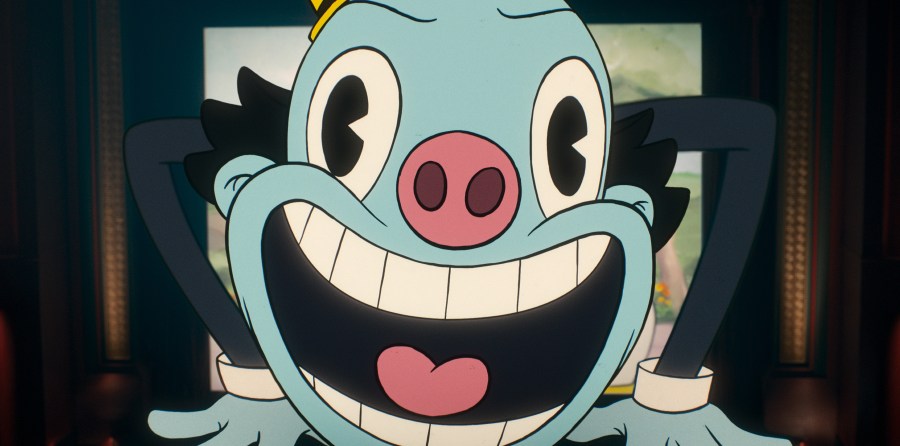
Enter: Mr Ring-a-Ding, the latest member of the Pantheon of Chaos, and one of the most inventive villains Doctor Who has introduced in years. The physical embodiment of Lux, God of Light, Mr Ring-a-Ding is one of the most memorable villains Doctor Who has in ages, and such a brilliant idea. A cartoon come to life that feeds on light and wants a body so he can bask in the light of the atomic bomb – it doesn’t get more Doctor Who than that.
After appearing in 2018’s The Witchfinders in the scenery-chewing role of King James I, Alan Cumming returns to the show as the voice of Mr Ring-a-Ding, and again makes a big impression. Cheeky, hilarious but utterly sinister, Cumming’s performance makes Mr Ring-a-Ding a true force to be reckoned with, amplifying the freaky is-he-a-man/is-he-a-pig/is-he-neither design with some truly unhinged line readings.
Both in his 2D form, and the horrifying 3D body he adopts at the story’s climax, Mr Ring-a-Ding is incredibly well-realised, showing just how much freedom the Disney + budget boost has given the show to go off the rails. The animation team at Framestore have done such a fantastic job with bringing his character to life, adding all sorts of little quirks like film grain, tear and sweat drops, and animated fireballs that really show the amount of effort that has been put into making him an iconic villain.
And crucially, his defeat is well-seeded throughout the episode. The flammability of old film stock and his aversion to sunlight are both laid out well before they become plot points. It’s a satisfying, thoughtful conclusion, especially after past Pantheon members like the Toymaker and Sutekh were dispatched in more rushed or muddled ways.
Miami, 1952

This is a sumptuously executed story from start to finish. Turning Penarth Pier into 1950s Miami shouldn’t have worked as well as it does, but the FX and set design are flawless – a real a testament to the creativity and resourcefulness of the production team.
Davies’ script is packed with lovely period details about early cinema and animation, hearkening back to Doctor Who’s educational roots. But it doesn’t ignore the darker side of the era. Both the Doctor and Belinda face racial segregation and bigotry, forced to justify their presence in spaces where they’re deemed unwelcome. The episode touches on these issues without getting bogged down in them, and while it could have gone further, the fact that it acknowledges these historical realities at all is very important. This is the first TARDIS team composed entirely of People of Colour, and that fact matters here, Davies showing us that, because of prejudices, they have to interact with the world of the story in a different way. The story treats it with the seriousness it deserves, without letting it overshadow the heart of the adventure.
Fan-tastic

One of the most talked-about parts of this episode is undeniably the scene where the Doctor and Belinda climb out of the TV and meet a trio of fans who have been watching their adventures. On paper, this sounds pretty ridiculous, but the way Davies weaves it into the greater themes of the story is admirable.
Just as Mr Ring-a-Ding gets life and power from watching old movies, the Whovians have gained happiness and friendship from watching Doctor Who. Unlike Ring-a-Ding, however, who sits alone in the dark absorbing light from the films he watches to gain enough power to wreak havoc, the Whovians watch their show communally, in the light, drawing hope and joy from it. Ultimately, Ring-a-Ding’s obsession with film eventually leads to his destruction, wanting more and more light until he gets outshone by the sun, but the fans’ obsession with Doctor Who brings them closer to one another, and they ultimately survive. This episode seems to serve as an aesthetic statement of sorts, then, telling us that when we engage with art for the right reasons, it can enrich our lives, but when we engage with it without appreciation, we remain unfulfilled.
Direction and Music

We’ve already talked a lot of about the execution of this episode, but director Amanda Brotchie and the entire team behind the scenes have done such a fantastic job that it’s worth talking about again. One thing I haven’t touched on yet is the main setting of the episode – the inside of the picture house- which I was surprised to find out in Doctor Who Unleashed was a studio set, rather than a real location. It’s really well-realised.
The music is also on point throughout, from Mr Ring-a-Ding’s catchy song to some jazzy takes on Fifteen’s theme and the glorious choral piece that plays at the story’s climax.
Of course, the most beautiful part of the episode is the cartoon scene, which sees the Doctor and Belinda animated like Hanna Barbera characters. This is the kind of thing that could only be achieved on a Disney + budget, and it looks utterly gorgeous. The ‘breaking out’ scenes are similarly well-done, from the Doctor and Belinda pulling down on the film reel, to their fourth wall-breaking escape from the fans’ TV.
Other Observations
- Why did Amy Pond’s theme play when Belinda was reminiscing about home? As far as I can tell, we haven’t had a theme for Belinda yet, so this would have been a good time to bring one in rather than recycling another, unrelated piece of music
- Although, talking of recycling music, the scene with the fans was the perfect place to re-use A Sad Man With a Box, perfectly recalling its use in The Big Bang where the Eleventh Doctor talks about becoming a story
- Another appearance from Mrs Flood! This is the first time she’s appeared outside of the present day, so now we know she can travel in space and time. And what an ominous set-up for the finale… May 24th can’t come soon enough
- Ms Lowenstein and Logan the waiter may have had small parts, but both were brilliantly performed and written, great examples of Davies giving minor characters real warmth and weight
Final Thoughts
One of the strongest episodes of the Fifteenth Doctor’s era so far, Lux is a rip-roaring ride of an adventure from start to finish. Pushing the Doctor and Belinda’s relationship in interesting new directions, and featuring one of the most creative villains in Who history, Mr Ring-a-Ding, this story is an instant classic.
Lux is available to watch on BBC iPlayer in the UK and on Disney + in the rest of the world



 Who Review
Leave a comment